Borrowed Sounds: How Indie Artists Are Mining Cantopop and J-Pop Gold for Something Entirely New
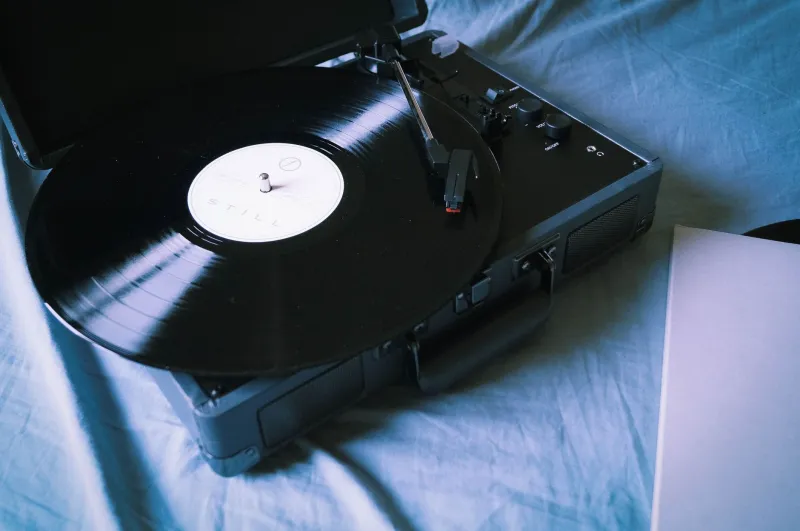
Start with a melody. Something from a 1994 Hong Kong film score — the kind of lush, slightly melancholic orchestration that played over a slow-motion shot of rain on neon-lit streets. Now pitch it down a few semitones, layer a drum pattern underneath that owes more to lo-fi bedroom pop than anything from the original era, and let a vocalist sing over it in English about something completely contemporary. Loneliness in a city full of people. The feeling of texting someone you used to love.
What you've got is something genuinely new. But it's built entirely from the past. And right now, it's one of the most exciting things happening in American independent music.
The Archive Opens
The story of how Cantopop, J-pop, and Hong Kong cinema soundtracks became source material for a generation of American indie artists is really a story about access. For decades, this music existed largely outside the reach of anyone who wasn't already embedded in those communities. You had to know someone, or frequent the right record shops, or grow up in a household where Leslie Cheung or Faye Wong played on weekend mornings.
The internet changed that. YouTube rabbit holes, digitized archives, fan communities that painstakingly uploaded rare recordings — suddenly, the full breadth of Asian popular music from the 1980s through the early 2000s was available to anyone with enough curiosity to look.
And a certain kind of millennial and Gen Z musician looked very hard.
What They Found
What these artists discovered wasn't just catchy songs. It was a complete aesthetic world. Hong Kong cinema soundtracks from the Wong Kar-wai era carried a specific emotional register — romantic but bittersweet, lush but restrained, nostalgic for a moment that was still happening. Cantopop at its peak had a melodic sophistication that sat somewhere between Western pop and traditional Chinese musical sensibility. J-pop from the late '80s and '90s had a particular shimmer to it, a kind of aspirational brightness that now reads as both dated and weirdly timeless.
For indie artists raised on bedroom pop, lo-fi hip-hop, and hyperpop, this was a goldmine. Not just because the sounds were beautiful — though they were — but because they were unfamiliar. In a musical moment when everything feels like it's been done, here was an entire tradition that most of their peers hadn't touched.
The Homage and the Rebellion
There's a dual impulse driving this trend, and it's worth sitting with both sides of it.
On one hand, there's genuine reverence. Many of the artists working in this space have talked openly about the emotional connection they feel to these sounds — whether because they grew up with them in Asian-American households, or because they encountered them at a formative moment and felt something click into place. Sampling a Cantopop melody or interpolating a J-pop chord progression is, for them, an act of love. It's saying: this music mattered, it still matters, and I want to bring it into conversation with the present.
On the other hand, there's something more subversive happening. The mainstream American music industry has historically treated Asian popular music as exotic at best, invisible at worst. By taking this material and building something contemporary with it — something that gets played on indie playlists, that shows up in editorial features, that gets licensed for TV shows — these artists are essentially forcing a reckoning. They're saying: you overlooked this. You didn't think it counted. Here's what you missed.
That's not just homage. That's a statement.
The Sonic Aesthetic Taking Shape
If you've spent any time on the more adventurous corners of streaming playlists in the last two years, you've probably encountered this sound without necessarily having a name for it. It tends to share certain characteristics: a warmth that comes from analog-adjacent production choices, melodies that have a slightly modal quality unfamiliar to Western ears, lyrics that are often more emotionally direct than ironic, and a sense of temporal displacement — the music feels like it exists in multiple eras simultaneously.
Producers working in this space have developed their own language for it. Some call it "Nanyang-wave" in online forums, a nod to the Southeast Asian and overseas Chinese cultural tradition that informs a significant portion of this music's heritage. Others just call it "the feeling" — that particular combination of nostalgia and nowness that's hard to articulate but immediately recognizable.
What's notable is how this aesthetic is spreading. Artists who started by making music for small communities of enthusiasts are finding broader audiences. Songs built on Cantopop samples are showing up in fashion brand playlists. J-pop interpolations are getting synced to indie film trailers. The sound is crossing over, quietly and on its own terms.
The Artists to Watch
This is a scene that's still largely underground, which means it's also still largely uncontaminated by commercial pressure. The most interesting work is happening in the spaces between genres, in Bandcamp pages and SoundCloud drops and bedroom-recorded EPs that get passed around in Discord servers before they ever hit a major playlist.
What's consistent across the most compelling work is intentionality. The artists who are doing this best aren't just grabbing sounds because they're novel. They're engaging with the cultural context of the music they're borrowing from — learning the history, understanding what these songs meant in their original context, and thinking carefully about how that meaning shifts when it's transplanted into a new setting.
That kind of thoughtfulness is what separates homage from appropriation, and it's also what makes the music genuinely interesting rather than just aesthetically clever.
Where It's Going
The mainstreaming of this sound feels inevitable, which means the underground version of it is probably at its most interesting right now. Once a major label figures out the formula and starts manufacturing it, the magic will be harder to find — though it won't disappear entirely.
For now, though, there's something genuinely exciting about a musical moment where the archives of Hong Kong cinema and the golden age of J-pop are being treated as living traditions rather than museum pieces. Where a kid in Cleveland or Austin or Portland is staying up until 2 a.m. making something new out of sounds that originated in a recording studio in 1991 Kowloon.
The Nanyang musical tradition has always been about synthesis — about cultures meeting and producing something that didn't exist before. These American indie artists, whether they know it or not, are continuing that tradition. Just from a different direction.