Why American Viewers Can't Stop Crying Over Taiwanese Grandmothers They've Never Met
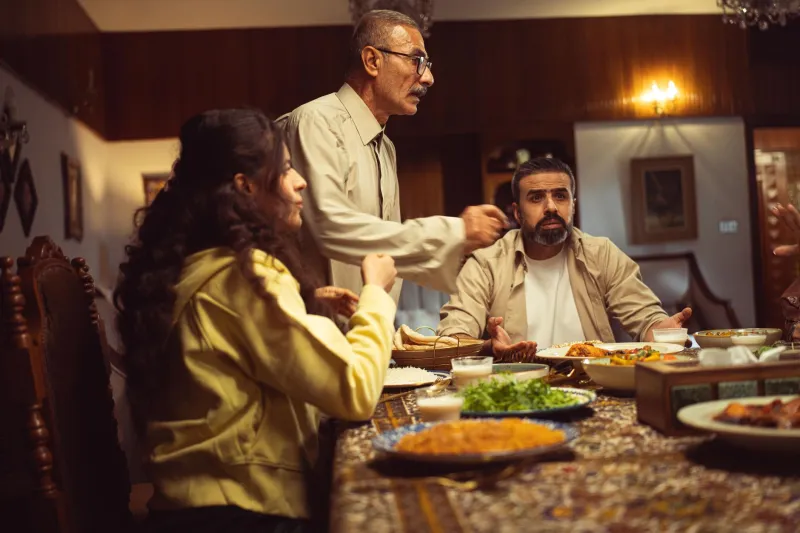
Somewhere between episode four and episode six, it happens. You're on the couch, probably with takeout going cold beside you, and a fictional grandmother in a cramped Taipei apartment says something to her adult daughter — something about sacrifice, about what she gave up, about what she never said out loud — and suddenly you're ugly-crying into a throw pillow. You didn't see it coming. Neither did the streaming algorithm that served this show to you.
This is the Grandma Effect. And it's reshaping what American audiences are actually watching.
From Seoul to Taipei: The Genre Shift Nobody Announced
For years, K-dramas were the entry point. They were polished, emotionally accessible, and subtitled in a way that felt almost cinematic. American viewers — particularly millennials and Gen Z — learned to sit with subtitles, to lean into the pacing, to appreciate a slower emotional burn. And then, quietly, the algorithm started offering something adjacent: Taiwanese family sagas, Chinese multigenerational epics, Thai dramas rooted in rural tradition and urban displacement.
Platforms like Netflix, Viki, and iQIYI have been seeding this content for a while now, but 2023 and 2024 marked a turning point. Shows rooted in the Nanyang tradition — stories that carry the weight of diaspora, of migration, of families fractured by geography and expectation — started showing up in US trending lists. Not because of massive marketing pushes. Because people were texting each other about them at midnight.
"I started watching because my friend said it reminded her of her own mom," says one viewer in a Reddit thread that's been shared thousands of times. "I finished it in two days and called my parents for the first time in months."
What These Stories Are Actually About
On the surface, a multigenerational Asian family drama might look like familiar territory — parents who sacrifice everything, children who rebel, grandparents who hold secrets like heirlooms. But the best of this genre does something more complicated. It refuses to assign blame cleanly. The overbearing mother is also the woman who worked three jobs. The distant father is also the man who never learned how to say he was proud. The adult child who fled to another city is also the one who sends money home every month without being asked.
Taiwanese productions in particular have developed a reputation for this kind of moral nuance. Shows like The World Between Us (though more thriller-adjacent) opened Western eyes to how Taiwanese TV could handle emotional complexity without melodrama. More recently, family-centered dramas exploring themes of inheritance — literal property, yes, but also emotional debt, cultural expectation, and generational trauma — have found devoted followings among American viewers who describe them as "exhausting in the best way."
Southeast Asian productions are adding another layer. Malaysian and Singaporean dramas, often rooted in the Nanyang experience of Chinese diaspora communities, bring a particular texture: the tension of being between cultures, of honoring ancestors while building something new. For Asian-American viewers, this isn't just entertainment. It's archaeology.
The American Mirror
Here's the thing that streaming executives are quietly realizing: these shows are resonating with non-Asian American viewers too, and possibly for the same reason.
America is in the middle of its own intergenerational reckoning. Millennials are navigating relationships with boomer parents who don't understand burnout culture. Gen Z is processing childhood experiences through a therapeutic vocabulary their parents never had. Conversations about "family systems," inherited trauma, and the cost of caregiving are everywhere — in therapy offices, in viral TikToks, in bestselling memoirs.
Asian family dramas, it turns out, have been exploring this emotional territory for decades. They just did it through the specific lens of Confucian duty, filial piety, and the particular silence that exists in families where love is expressed through action rather than words. American viewers aren't just watching these shows. They're using them as a kind of emotional decoder ring for their own family dynamics.
"It's like someone finally made a show about my mom," one Black American viewer wrote in a review of a Chinese family drama. "The culture is completely different but the feeling is exactly the same."
The Streaming Bet
Behind the scenes, platforms are paying attention. Netflix has expanded its Asian content licensing significantly, and while K-drama still dominates the marketing spend, insiders suggest that Taiwanese and Southeast Asian content is being greenlit at a faster rate than the public announcements would suggest. Viki, which has always been more attuned to the niche end of this market, has seen engagement metrics on family dramas climb steadily.
The economics make sense. These productions are typically less expensive than their Korean counterparts, the talent pipelines are deep, and the storytelling traditions are rich. More importantly, they're generating the kind of word-of-mouth that no paid campaign can manufacture.
Why This Matters Beyond the Algorithm
There's something genuinely meaningful happening here that goes beyond content strategy. When an American viewer sits with a story about a Taiwanese grandmother who never told her daughter she loved her because that's simply not how her generation communicated — and finds themselves wrecked by it — something cross-cultural is occurring that's hard to quantify.
Nanyang storytelling has always carried this particular gift: the ability to hold contradiction, to honor complexity, to refuse easy resolution. Families in these dramas don't always reconcile. Sometimes the grandmother dies before anything is said. Sometimes the inheritance tears the family apart. And somehow, that honesty is exactly what makes it feel true.
American audiences are hungry for that. They've had enough of tidy narrative arcs and emotionally resolved finales. They want to feel something real, even if — especially if — it's borrowed from a culture they're only beginning to understand.
The grandma effect is real. And it's only getting started.