The New Auteurs: How Asian Filmmakers Went from Festival Darlings to Hollywood Power Players
Not long ago, the path for an Asian director in Hollywood looked something like this: make a visually striking film that impressed Western critics, get labeled an "international sensation," maybe land a studio meeting or two, and then watch the opportunity quietly evaporate. The industry would admire the talent from a respectful distance without ever fully opening the door.
That pattern is breaking down — loudly and publicly.
The past few years have produced a string of moments that would have seemed almost unthinkable a decade ago. Bong Joon-ho cleaning up at the Oscars. Chloe Zhao directing a Marvel blockbuster. Daniel Kwan and Daniel Scheinert handing the Best Picture trophy to a film built around a middle-aged Chinese-American immigrant and a running gag about hot dog fingers. The industry's relationship with Asian storytelling has shifted from polite curiosity to something that looks a lot more like genuine hunger.
Streaming Changed the Math
You can't tell this story without talking about Netflix, HBO Max, and the rest of the streaming ecosystem that quietly dismantled the old gatekeeping structure. When platforms started competing for global subscribers rather than domestic box office receipts, the calculus around what kind of content was worth funding changed overnight.
Suddenly, a Korean thriller that might have topped out at limited theatrical release in the US was getting pushed to 190 countries simultaneously. Audiences in Ohio and Oregon were binge-watching Malaysian crime dramas and Taiwanese coming-of-age stories because the algorithm kept serving them up — and they kept watching. What streaming revealed, almost accidentally, was that American audiences had a far greater appetite for non-Western storytelling than Hollywood had ever bothered to test.
For Asian directors, that data was leverage. When you can point to viewing numbers that prove your stories travel, studio conversations stop being about whether non-English content can find an audience and start being about how to get more of it made.
The Award Circuit as a Launching Pad
Festival buzz has always been a currency in the film industry, but the way Asian filmmakers are converting that buzz into institutional power has reached a new level. Directors who built their reputations on the Cannes or Sundance circuit are now being handed nine-figure budgets and franchise-level projects.
Take the trajectory of someone like Destin Daniel Cretton, who went from indie drama Short Term 12 to directing Shang-Chi and the Legend of the Ten Rings — a film that became one of the MCU's most critically celebrated origin stories precisely because it leaned into its cultural specificity rather than sanding it down for a generic audience. Or consider how Lee Isaac Chung's deeply personal Minari, a quiet film about a Korean-American family farming in Arkansas, ended up as an Oscar Best Picture nominee and launched him into the director's chair for Twisters.
The pipeline from personal, culturally grounded work to major studio projects isn't just opening — it's becoming a recognizable career path.
What's Actually Different This Time
Some industry observers are cautious about declaring a true paradigm shift, and that skepticism is fair. Hollywood has had its "moments" before — bursts of enthusiasm for Asian talent that faded back into the usual patterns of tokenism and limited opportunity. So what makes this wave feel different?
A few things, actually.
First, the demographic reality of American audiences is impossible to ignore. The US Asian-American population has grown significantly over the past two decades, and that community has demonstrated — loudly, on social media and at the box office — that it will show up in force for stories that reflect its experience. The opening weekend numbers for Crazy Rich Asians back in 2018 weren't just a feel-good story; they were a market signal that studio finance teams couldn't dismiss.
Second, the conversation around representation has moved from being primarily about fairness to being about quality and commercial viability. When Everything Everywhere All at Once becomes one of the most awarded films in Oscar history, it's no longer possible to argue that centering Asian-American stories is a financial risk. The argument has been empirically settled.
Third — and this might be the most structurally important shift — Asian directors are increasingly entering Hollywood not as grateful outsiders but as proven commodities with negotiating power. They're arriving with streaming track records, festival laurels, and in some cases, their own production companies. That changes the dynamic in a room.
The Nanyang Perspective
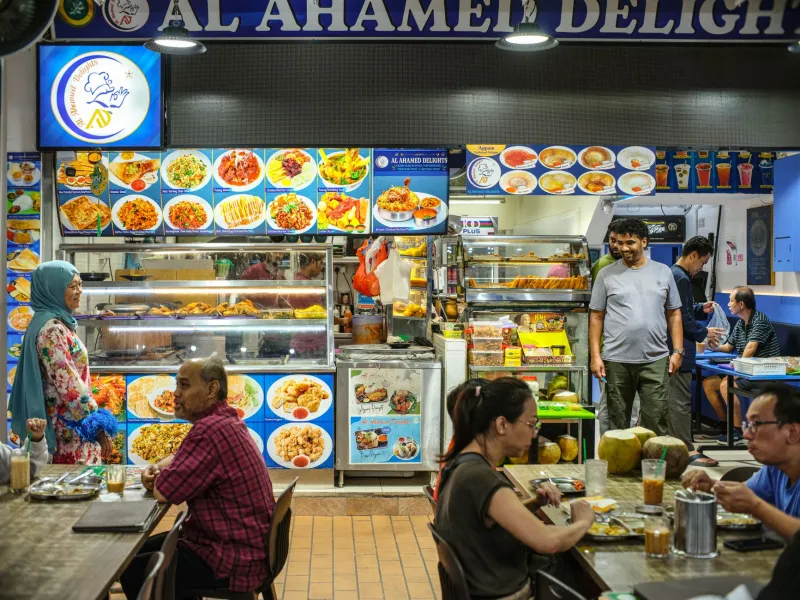
For those of us who've been watching Southeast Asian and East Asian cinema for years, there's something both exciting and slightly surreal about watching Hollywood catch up. The storytelling traditions that inform so much of what's now being celebrated in Western award circles — the genre-blending of Hong Kong cinema, the atmospheric restraint of Taiwanese new wave, the bold social commentary embedded in Korean thrillers — these weren't invented for American audiences. They were built over decades by filmmakers working within their own cultural contexts, for their own communities.
What's happening now is less a discovery and more a recognition. The Nanyang storytelling tradition, broadly understood, has always had this richness. It just took streaming algorithms and changing demographics to make Hollywood pay attention.
Emerging directors from the region are increasingly savvy about navigating that dynamic. They're finding ways to tell stories rooted in specific cultural experiences — the complexity of immigrant identity, the weight of intergenerational expectation, the particular texture of life in Southeast Asian cities — without flattening those stories into something more palatable for a presumed Western gaze. The best of them are making Hollywood come to their aesthetic rather than the other way around.
What Comes Next
The honest answer is that nobody knows whether this moment consolidates into something lasting or plateaus into a new, slightly more diverse version of the old status quo. The history of Hollywood is littered with moments of apparent progress that quietly receded.
But there are reasons for measured optimism. The structural forces driving this shift — streaming's global economics, demographic change, the proven commercial power of culturally specific storytelling — aren't going anywhere. And perhaps more importantly, there's now a generation of Asian and Asian-American filmmakers who have seen what's possible and are building careers accordingly.
The glass ceiling isn't gone. But it's cracked in ways that are starting to let real light through — and that light looks a lot like the glow of a cinema screen somewhere in Kuala Lumpur, Seoul, Taipei, or Los Angeles, where someone is watching a story that finally feels like their own.