The Long Way Home: How Asian-American Young Adults Are Finding Their Parents' Worlds Through a Screen
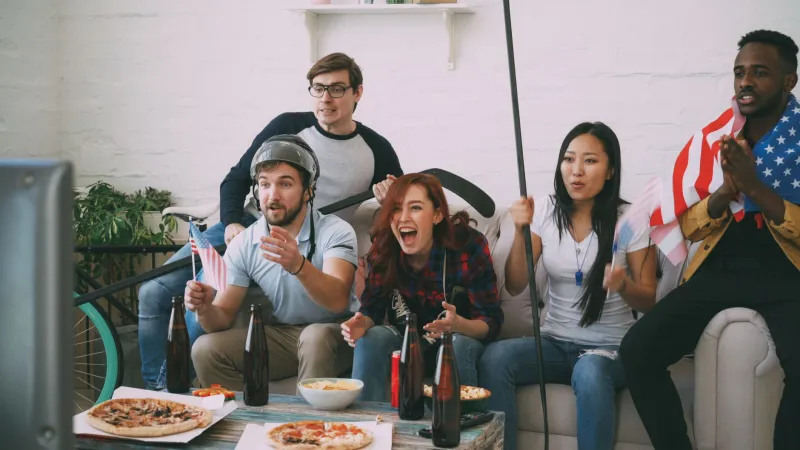
Somewhere in a Chicago apartment, a twenty-three-year-old is pausing a C-drama to look up a word she half-recognizes from childhood dinners. In a Houston suburb, a college student is texting his dad a meme about a Thai actor his dad mentioned once, years ago, in a conversation he barely remembered until the algorithm surfaced it. In Queens, two sisters are learning a Tagalog song for their lola's birthday because they heard it in a Filipino film on Netflix and it wrecked them completely.
This is happening everywhere. And it's changing something.
The Gap That Entertainment Is Quietly Closing
The experience of growing up hyphenated in America — Asian-American, Filipino-American, Chinese-American, Vietnamese-American — often involves a particular kind of distance. Not geographic distance, but cultural distance: the space between the world your parents came from and the world you were raised in, a gap that can feel enormous when you're twelve and desperate to fit in, and then begins to ache differently when you're older and realize you don't quite know where you fit at all.
For previous generations, bridging that gap required deliberate effort — language classes, trips back to the homeland, community organizations, the occasional VHS tape of a soap opera your grandmother sent in the mail. The infrastructure for cultural connection existed, but it was fragmented and effortful.
Streaming changed the math entirely.
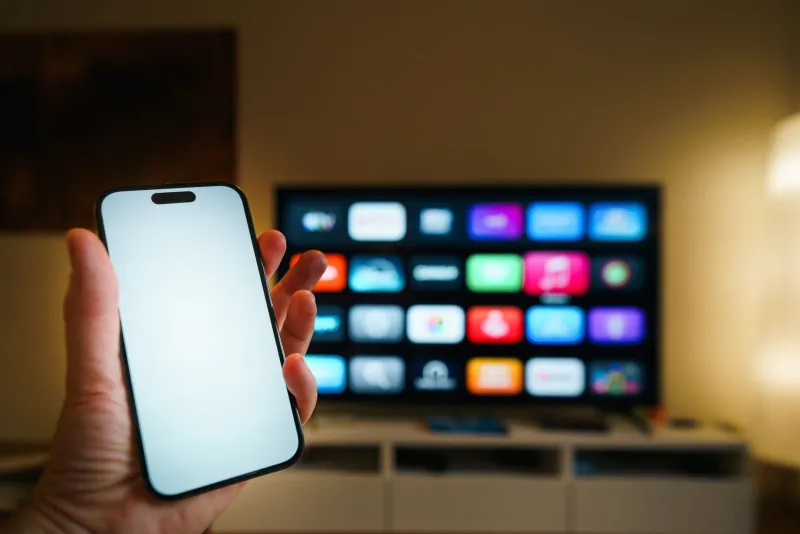
When Netflix, Viki, WeTV, and iQIYI started making enormous catalogs of Asian content available in the United States — with subtitles, with recommendation algorithms, with social communities built around shared viewing — they inadvertently built the most accessible cultural bridge the diaspora had ever seen. You didn't have to seek it out. It found you.
C-Dramas as a Language Classroom
Take Mandarin acquisition as a case study. Heritage language programs have existed for decades, and they've always struggled with the same problem: motivation. Learning a language in a classroom, disconnected from any emotional stakes, is hard. Learning it because you want to understand what a character just whispered to their love interest at the end of episode fourteen — that's a different kind of motivation entirely.
The number of second-generation Chinese-Americans who report improved Mandarin comprehension as a direct result of watching C-dramas is genuinely difficult to quantify, but the anecdotal evidence is overwhelming. Reddit threads, TikTok comments, private Discord servers — the testimony is consistent. People who grew up understanding maybe forty percent of what their parents said at the dinner table are now at sixty, seventy, eighty percent. Not because they studied. Because they watched.
And the cultural literacy that comes with language acquisition isn't limited to vocabulary. These shows are dense with historical references, regional customs, family dynamics, and social codes that illuminate the world their parents navigated before they immigrated. Watching a drama set in 1990s Shanghai or a contemporary story about a family business in Chengdu isn't just entertainment — it's context.
Music as Memory and Discovery Simultaneously
The phenomenon extends well beyond film and television. For Filipino-Americans, the global rise of OPM — Original Pilipino Music — has created something remarkable: a generation of young adults who are discovering, for the first time, music that their parents have loved their entire lives.
Artists like Ben&Ben, SB19, and BINI have found audiences among Filipino-American Gen Z who might never have encountered them without TikTok and Spotify. But the discovery doesn't stop at the contemporary. Playlists lead to older songs. Older songs lead to questions. Questions lead to conversations with parents who can't quite believe their kid is asking about a singer from before they were born.
Those conversations matter. They're the kind of exchange that the hyphenated experience often struggles to generate — a moment where the parent is the expert, where the cultural knowledge flows in the other direction, where the child is genuinely curious rather than politely tolerant.
Similar dynamics play out across the diaspora. Korean-Americans attending concerts by artists their parents grew up with. Vietnamese-Americans diving deep into cải lương, a traditional musical theater form, after stumbling across a contemporary revival on YouTube. The entertainment is the entry point. The relationship is the destination.
Identity Formation in the Age of the Algorithm
What does it mean for identity formation when the cultural bridge is built by an algorithm?
It's a fair question, and not an entirely comfortable one. There's something worth examining in the fact that platforms with their own commercial interests are mediating the relationship between diaspora youth and their heritage. The version of the Philippines, or China, or Vietnam, or Thailand that surfaces on a streaming platform is curated, edited, and optimized for engagement. It's not the whole picture.
But the same could be said of every cultural transmission mechanism that has ever existed. The stories grandparents tell are curated. The dishes that survive immigration are the ones someone chose to keep making. Culture is always a selection, always an interpretation.
What streaming and social media have done is democratize that selection process — and, crucially, make it low-stakes enough that young people will actually engage with it. You don't have to commit to a summer trip to the homeland. You just have to click play.
The Conversation That Follows
Perhaps the most underreported aspect of this phenomenon is what happens after the viewing. The conversations it generates.
Parents who spent years feeling like their cultural world was invisible to their American-raised children are suddenly fielding questions. Recommendations. Sometimes corrections — because the kid watched a documentary and now knows something the parent didn't. The dynamic shifts. The relationship deepens.
For many Asian-American families, the things that were hardest to talk about — immigration, sacrifice, the life that was left behind — have found unexpected entry points through entertainment. A scene in a drama that mirrors something a parent experienced. A song that unlocks a memory. A film that makes visible a history that was never explicitly taught.
This is what Nanyang has always understood: that stories are how communities survive distance, time, and displacement. The medium changes. The function doesn't.
The screen is just the latest vessel. The journey it enables is as old as the diaspora itself.