Neon, Noodles, and Nostalgia: Why the Night Market Is Taking Over Asian Cinema Right Now
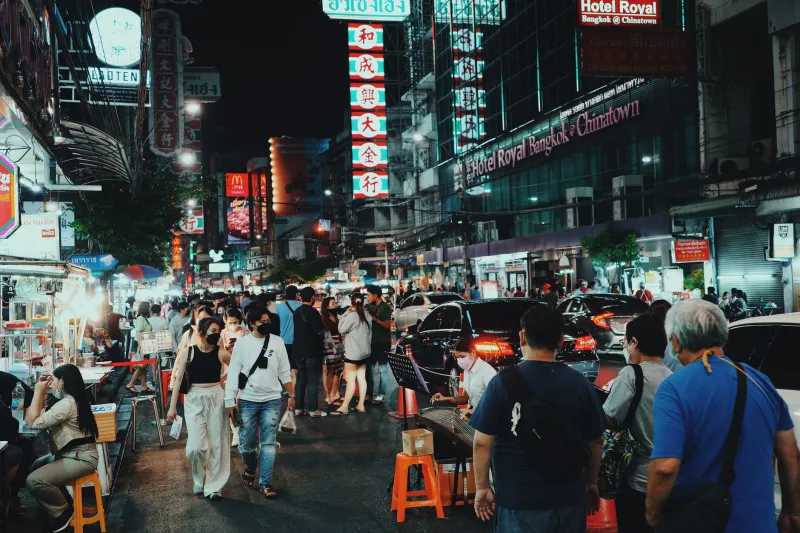
There's a particular kind of magic that happens when the sun goes down in Southeast Asia. The folding tables come out, the charcoal fires get lit, and suddenly an ordinary stretch of sidewalk transforms into something that feels almost cinematic on its own. The pasar malam — the night market — has been a cornerstone of daily life across Malaysia, Singapore, Indonesia, and beyond for generations. And now, it's becoming one of the most compelling visual settings in Asian film and television.
If you've been scrolling through Netflix or HBO Max lately, you've probably noticed it. That unmistakable glow of string lights over steaming bowls of laksa. The chaotic beauty of a crowded lane where vendors shout over each other and the smell of grilled corn mingles with something sweet frying nearby. These aren't just pretty backdrops — they're doing serious narrative work, and audiences in the US are responding in a big way.
The Scene That Started a Conversation
For a lot of American viewers, the gateway moment came with Crazy Rich Asians (2018). The opening act's hawker center sequence — where Rachel Chu sits across from Nick Young's world for the first time over plates of chili crab and char kway teow — wasn't just a dinner scene. It was a statement. Director Jon M. Chu made a deliberate choice to anchor a story about extreme wealth in a place that is fundamentally democratic and communal. Anyone can pull up a plastic stool at a hawker stall. That contrast said everything.
But Crazy Rich Asians was really just the moment mainstream Hollywood caught up to something that Southeast Asian filmmakers had been doing for years. Malaysian indie cinema, in particular, has long used the night market as a kind of emotional shorthand. In Tan Chui Mui's quiet, observational films, or in the street-level realism of early Yasmin Ahmad works, the pasar malam functions almost like a character itself — messy, alive, impossible to fully pin down.
More Than a Backdrop — It's a Feeling
So what is it about the night market that translates so powerfully to the screen? Cultural critic and film writer Priya Menon, who covers Southeast Asian cinema for several publications, puts it this way: "The night market is one of the few spaces in Nanyang culture where every social boundary gets blurred. Rich, poor, old, young, every dialect and ethnicity — everyone shows up. That kind of space is incredibly useful for storytelling because it allows for collision. Characters who would never otherwise meet, meet."
That collision energy shows up everywhere once you start looking for it. In the Singaporean drama series Invisible Stories (available on Netflix), a night market sequence in one episode becomes the pivot point for an unexpected connection between two strangers from completely different walks of life. The stalls and the crowd do the work that a more conventional screenplay might hand to coincidence or contrivance.
For diaspora viewers in the US — and there are millions of Southeast Asian Americans who grew up with some version of the pasar malam in their family memory — these scenes hit differently. It's not just recognition. It's the specific sensory recall of something you maybe only experienced on a trip to visit grandparents, or in the stories your parents told. Cinema has a way of unlocking that kind of memory, and the night market setting seems almost purpose-built for it.
The Indie Films You Might Have Missed
Beyond the big-budget titles, a wave of smaller films has been using the night market with real sophistication. Babi Buta yang Ingin Terbang ("Blind Pig Who Wants to Fly"), an Indonesian art film that has screened at festivals across the US, uses market settings to explore questions of identity and belonging with a quietly devastating effect. The Thai film One for the Road, produced by Wong Kar-wai and streaming on Netflix, captures street-food culture with that same woozy, time-suspended quality that makes you feel like you're actually there.
On the series side, HBO Asia's Invisible Stories and the Malaysian anthology Folklore have both leaned into hyperlocal settings — including night markets — as a way of grounding supernatural or dramatic narratives in something tangible and culturally specific. It's a smart move. Universal emotions land harder when they're wrapped in specific, real-feeling details.
Why US Audiences Are Ready for This
American viewers are more curious about Southeast Asian stories than ever before, and the streaming wars have a lot to do with that. Netflix's investment in regional Asian content has put titles in front of US subscribers that would previously have required a film festival ticket or a very specific DVD import. When a show from Kuala Lumpur or Bangkok sits in the same interface as Stranger Things, the cultural distance shrinks.
There's also a generational shift happening among Asian Americans themselves. Younger viewers — many of them children or grandchildren of immigrants from Malaysia, Singapore, the Philippines, Vietnam, and elsewhere — are actively seeking out content that reflects their heritage. The night market, with its Nanyang roots, is one of the most recognizable and beloved symbols of that heritage. Seeing it on screen, treated with care and specificity rather than as exotic wallpaper, matters.
Bringing the Pasar Malam to America
Here's the thing — you don't have to book a flight to experience a little of that magic. Across the US, Asian American communities have been building their own versions of the night market, and several have grown into genuinely impressive cultural events.
Night + Market in Los Angeles — Not just a restaurant name, but a broader movement in the LA food scene that draws heavily on Thai street food tradition. The surrounding neighborhoods of Thai Town and Little Tokyo regularly host outdoor food events that channel serious night market energy.
Asia Night Market in Seattle — Organized by the InterIm Community Development Association, this annual event in the Chinatown-International District is one of the most authentic recreations of the Southeast Asian pasar malam experience you'll find in the Pacific Northwest. Vendors, performances, and a genuine community atmosphere.
Night Market in Houston's Bellaire Corridor — Houston has one of the most significant Vietnamese and Southeast Asian communities in the country, and the food corridor along Bellaire Boulevard regularly comes alive with pop-up market events, especially around Lunar New Year.
Taste of Asia in the San Francisco Bay Area — Various iterations of this event across the Bay Area draw on the region's enormous Southeast Asian diaspora population, with hawker-style food stalls that would feel right at home on Jalan Alor.
The next time you're watching a film and a night market scene comes on — those string lights, that crowd, the steam rising off a wok — know that you're watching something with deep roots and real emotional weight. The pasar malam didn't just wander onto the screen by accident. It was always a story waiting to be told.