No Gatekeepers Needed: How Asian Pop Acts Are Rewriting the American Music Playbook One Stream at a Time
For most of the 20th century, breaking into the American music market from outside the US followed a pretty rigid script. You needed the right label deal, the right radio promoter, the right late-night TV slot, and ideally an English-language album recorded in a studio in Los Angeles or Nashville. The gatekeepers were real, and they had very specific ideas about what American audiences would and wouldn't accept.
That script is being shredded in real time, and a significant part of the story is happening across the Pacific.
The Numbers Don't Lie
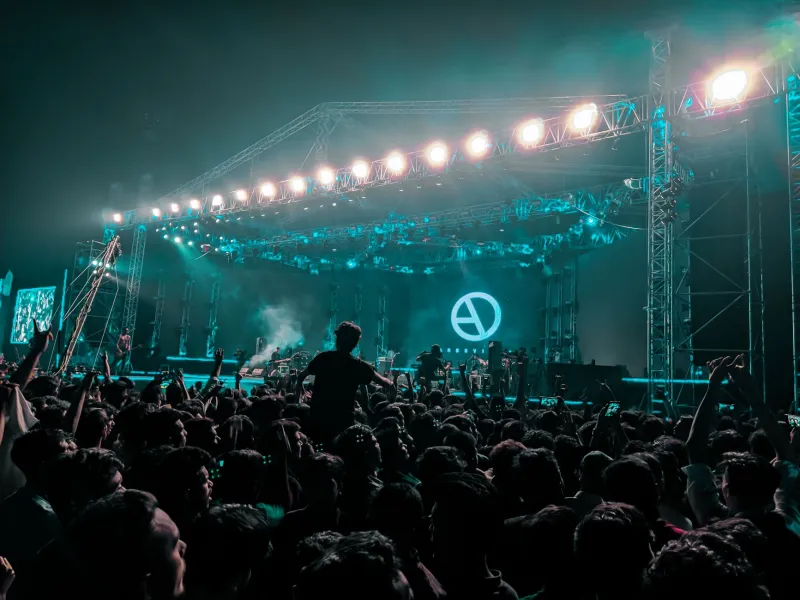
Let's start with some context. SEVENTEEN — the 13-member K-pop group from HYBE — sold out multiple US stadium dates in 2024 without a single English-language single to their name. NewJeans landed on the Billboard Hot 100 with tracks sung almost entirely in Korean, riding a wave of TikTok virality that no traditional radio campaign could have manufactured. And Joji, the Japanese-Australian artist formerly known as Filthy Frank, built one of the most devoted fanbases in lo-fi R&B without ever fitting neatly into any format radio was prepared to play.
These aren't flukes. They're a pattern. And the pattern points toward a fundamental restructuring of how music reaches American ears.
The old model assumed a linear path: create product, get distribution, buy access to gatekeepers, hope for mainstream acceptance. The new model looks nothing like that. It's networked, community-driven, and moves at algorithmic speed.
TikTok as the Great Equalizer
It's impossible to tell this story without talking about TikTok, even as its future in the US market remains uncertain. The platform fundamentally changed the discovery dynamic for music — not by replacing taste-making, but by democratizing it. A 15-second clip posted in Seoul could land on the For You pages of teenagers in Atlanta and Portland before any label executive had a chance to greenlight anything.
NewJeans understood this intuitively. Their early releases felt designed for the short-form moment — immediate, textured, with a sonic identity so distinct that even a clip fragment was recognizable. But the strategy went deeper than just making TikTok-friendly sounds. The group's aesthetic drew heavily from Y2K nostalgia while incorporating distinctly Korean visual and cultural references, creating something that felt simultaneously familiar and new to Western audiences who'd grown up on a diet of early 2000s pop.
The result was organic virality that no amount of paid promotion could have replicated. And when the streams followed, the Billboard charts had no choice but to reflect the reality of what people were actually listening to.
The Authenticity Premium
Here's the thing that the old gatekeeping model never fully accounted for: American audiences, particularly younger ones, have a finely tuned radar for inauthenticity. The calculated, committee-approved pop product that dominated the 2010s has lost significant cultural currency. What's replaced it, in part, is a hunger for artists who feel like they're operating on their own terms.
Asian pop acts — both those based in Asia and Asian-American artists working stateside — are benefiting from this shift in ways that are genuinely interesting to watch. Groups like SEVENTEEN have built their reputation on a collaborative creative process where members write and produce their own material. That process is visible to fans in a way that the manufactured pop assembly line never was. The behind-the-scenes content, the creative documentation, the parasocial intimacy — it all adds up to an authenticity premium that translates across cultural and language barriers.
Olivia Rodrigo is a different but related case study. As a Filipino-American artist, she's never leaned heavily into her heritage as a marketing hook — but her music carries an emotional directness and a willingness to be specific in its references that resonates with Asian-American listeners who've historically seen themselves underrepresented in mainstream pop narratives. Her success opened a door that more explicitly Asian-rooted artists are now walking through.
Challenging the Language Barrier Myth
For years, the conventional wisdom in the American music industry held that non-English music had a hard ceiling in the US market. BTS demolished that ceiling so thoroughly that it's almost embarrassing to revisit the old arguments. But the lesson still hasn't fully landed in every corner of the industry.
The reality is that American listeners — especially those under 30 — have grown up in a genuinely multicultural media environment. They stream anime, they watch Korean dramas on Netflix, they eat at Korean BBQ spots and Vietnamese pho joints in their neighborhoods. The cultural distance between Asian pop music and the American mainstream is much shorter than it was even a decade ago, and it's getting shorter every year.
Language, it turns out, is far less of a barrier than it is a texture. The emotional content of a song communicates across linguistic lines in ways that music industry executives underestimated for a very long time.
The Global Fanbase as Infrastructure
One structural advantage that Asian pop acts bring to the American market is an existing global infrastructure of passionate, organized fans. K-pop fandoms in particular have developed sophisticated systems for coordinating streaming campaigns, chart manipulation (in the strategic, not fraudulent sense), and social media amplification that Western artist management teams are still trying to reverse-engineer.
This isn't just fan enthusiasm — it's a genuine competitive advantage. When a new SEVENTEEN release drops, the coordinated global response generates streaming numbers that push the algorithm in their favor before any American radio programmer has even heard the track. By the time the song surfaces on a Spotify editorial playlist, it already has momentum.
What the Industry Is Still Getting Wrong
For all the progress, the American music industry's relationship with Asian artists remains complicated. There's still a tendency to treat Asian pop success as a niche phenomenon rather than a genuine mainstream story — to silo it into "K-pop charts" or "Asian music" categories rather than reckoning with what it means for the broader industry.
The artists themselves are pushing back against that framing, quietly but persistently. They're not asking to be exceptions to the rule. They're in the process of changing what the rule is.
The gatekeepers haven't disappeared. But their gates are opening whether they want to or not.